At a black-tie gala in June 1988, Golf Magazine assembled the “100 Heroes of American Golf” in the grand ballroom of New York’s Waldorf Astoria. Among the legends making a rare public appearance was Ben Hogan. He was joined by Arnold Palmer, Jack Nicklaus, Sam Snead, and many of the most celebrated figures in the men’s and women’s game.
Only two amateurs were in attendance, as the early legends like Bobby Jones, Francis Ouimet, and Chick Evans had long since passed away. Bill Campbell, past his competitive prime, was acknowledged for his USGA administrative leadership. The other amateur—still very much a force whenever he teed it up—was five-time national champion Jay Sigel, fresh off his third U.S. Mid-Amateur title just eight months earlier.
Perhaps the most striking aspect of Sigel’s inclusion among the “100 Heroes of American Golf” was how much of his story was still ahead of him. In the years that followed, he added more championships, represented the United States on three additional Walker Cup teams, and eventually turned professional—setting Champions Tour records that endure to this day.
Sigel’s path to the Waldorf Astoria that night had once pointed toward a professional career. As the first recipient of the Arnold Palmer Scholarship at Wake Forest University, he seemed destined for stardom on the PGA Tour. But everything changed in an instant when he drove his left hand through a fraternity house glass door, severing nerves and veins in his wrist. The injury reshaped his life and ambitions, a moment he would later describe as a “blessing in disguise.”
In this gripping memoir, Sigel brings readers along on his climb back—through the pressure, the pain, the heartbreaks, and the triumphs. His remarkable amateur career was built in the margins of a full life. For nearly half of every year, he put his clubs away to focus on the insurance business he built and the family he cherished. His victories were not the product of unlimited practice, but of extraordinary discipline, competitive fire, and an uncommon ability to rise to the moment.
Sigel’s journey also mirrors the transformation of amateur golf in the latter half of the 20th century, as the era of lifelong amateurs gave way to college stars preparing for the PGA Tour. Others would win national or regional titles after him, but no one dominated with his consistency, longevity, or competitive edge. As Augusta National Chairman Fred Ridley observed, “We will never see his like again.”
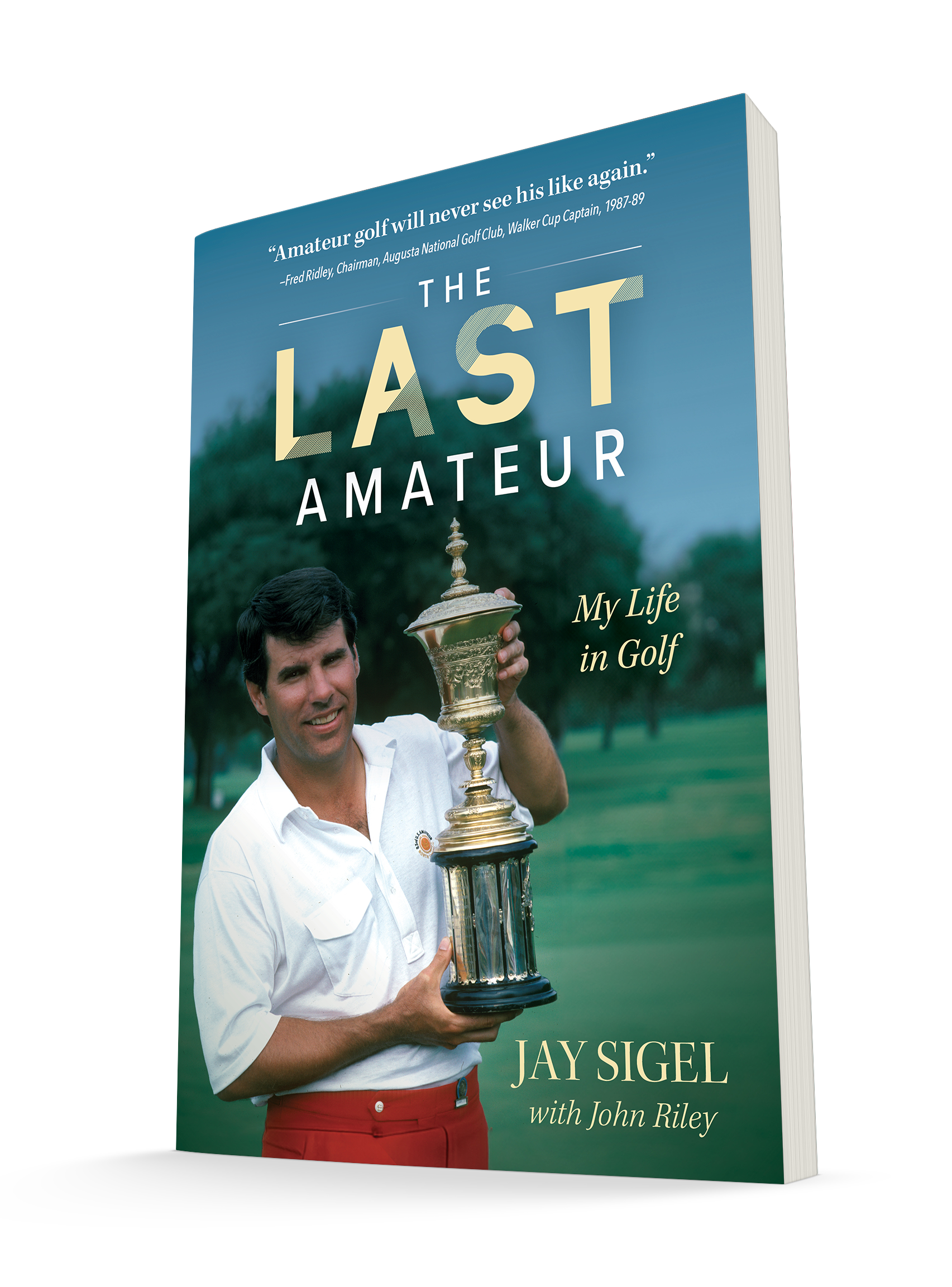
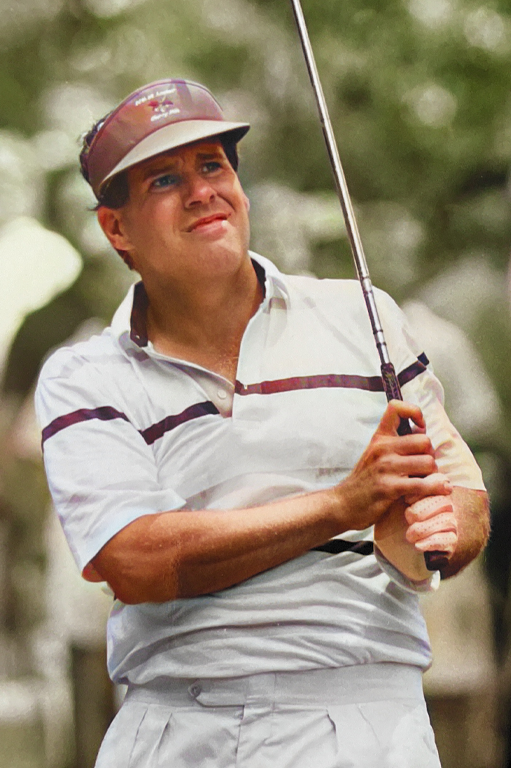
Jay Sigel was born on November 13, 1943, in Narberth, Pennsylvania. An all-around athlete, Jay learned to play golf near his home at the Bala Golf Club. At the age of 16, he won his first Pennsylvania junior championship, and at 17, he won his first national championship. Recruited to play golf at the perennial golf powerhouse, the University of Houston, he soon transferred to Wake Forest University, where he became the first recipient of the Arnold Palmer scholarship. In his first year of eligibility, Jay won the Atlantic Coast Conference championship.
After sustaining a near career-ending hand injury, Jay decided to forgo a possible professional career and remain an amateur. Over the next 30 years, he compiled one of the greatest records in golf history while also building a successful insurance business. His accomplishments in golf included capturing dozens of state and local championships, as well as two U.S. Amateur Championships, three U.S. Mid-Amateur Championships, and a British Amateur Championship. He played on a recond nine Walker Cup teams, twice as playing-captain.
At the age of 50, Jay turned professional and joined the PGA Senior Tour (today's PGA Tour Champions). He won eight tournaments and compiled over $9 million in winnings. Active in his community and philanthropy, Jay served on the Board of Trustees of Wake Forest University, where he established a scholarship fund.
He spent decades as chair of the First Tee of Greater Philadelphia and its predecessor organization. In 1993, he established his signature event, the Jay Sigel Invitational, which has raised $5.8 million for Penn Medicine's Abramson Cancer Center. Jay and his wife, Betty, raised three daughters, Jennifer, Amy, and Megan.

John Riley retired as a public relations executive in 2016 and began a new career as an author at the age of 70. His golf books have won both national and local awards and his biography on the life of PGA Tour professional Ed “Porky” Oliver was a finalist for the United States Golf Association’s 2022 Herbert Warren Wind Award.
John and his wife Sharon live in Wilmington Delaware. He is a graduate of the University of Delaware where he captained the golf team.

Finalist for the USGA's 2022 Herbert Warren Wind Award

Recognized as best adult non-fiction book of 2019 in the memoir/autobiography category by the Delaware Press Association


Please feel free to reach out with any questions, comments or interview requests at the form below. We'll be back in touch ASAP.
© Copyright 2025, Riley Publications. All Rights Reserved.